
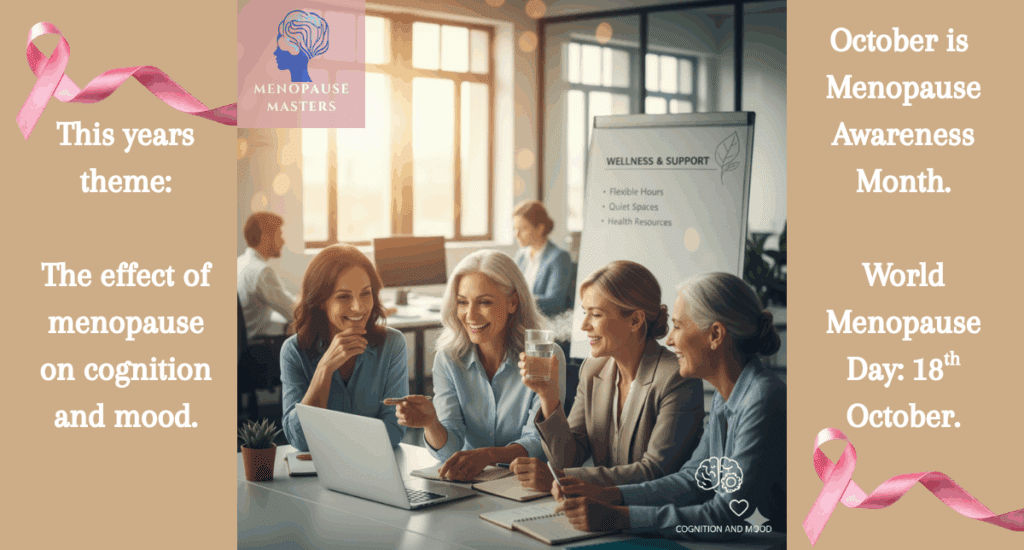
Menopause Awareness Month: Unpacking the Impact on Cognition and Mood
As we mark Menopause Awareness Month throughout October, our focus sharpens on a critical theme: the effect of menopause on cognition and mood. This year, especially leading up to World Menopause Day on 18th October, we aim to validate and illuminate these often-misunderstood symptoms. While hot flashes dominate the conversation, many women silently grapple with cognitive and emotional shifts that impact their daily lives and careers.
This article offers understanding, validation, and practical pathways to support, ensuring no woman feels alone or invisible during this significant life stage.
Menopause in the UK: Defining the Transition and the Workplace Reality
The menopause is a natural, inevitable stage of life that all women experience. Medically speaking, it marks the point when a woman ceases to ovulate and her periods eventually stop, caused by a change in hormone levels. According to the NHS, the average age women experience the menopause in the UK is 51, though the transitional phase (perimenopause) can begin many years earlier. Symptoms vary widely, with common experiences including hot flushes, sleep disturbances, and night sweats.
Historically, this transition has often been perceived in a negative or dismissive way. This stigma is particularly damaging in the workplace, where women can feel overlooked, embarrassed, or struggle long term to manage their symptoms while maintaining their professional efficacy.
The Scale of Support Needed
The need for better workplace support is quantifiable and massive. The Office of National Statistics (ONS) reported that in 2021, there were approximately four million women, aged between 45–55, in employment. This represents a huge, valuable segment of the workforce. Supporting this group is not just a matter of fairness, but of business necessity: the Chartered Institute of Personnel Development (CIPD) found that ‘six in ten menopausal women say their symptoms have had a negative impact on their work.’
By prioritising the well-being of menopausal employees and creating a menopause-friendly workplace, companies stand to reap significant benefits. These include retaining experienced staff, fostering a more inclusive environment, and ultimately benefiting from a happier, more resilient, and varied workforce.
The Invisible Shifts: Cognition and Mood
Menopause isn’t just about the absence of periods; it’s a complex hormonal transition that affects the brain.
- Cognition (The “Brain Fog”): The experience of “brain fog”—memory lapses, word recall struggles, and difficulty concentrating—is a very real, physiological response. The ONS has noted the substantial impact these issues have on professional performance. As oestrogen levels fluctuate, they disrupt brain functions related to memory and focus. Recognising this as a temporary, hormonal effect, rather than a personal failing, is crucial for self-compassion.
- Mood (The Emotional Rollercoaster): Hormonal shifts can lead to significant emotional disturbances. Anxiety often heightens, sometimes manifesting as panic, while depression can emerge or worsen. Compounding this, poor sleep—a common symptom—severely limits our capacity for emotional regulation, creating a difficult cycle of fatigue and stress.
Menopause in the Workplace: Demand for Support
The impact of unmanaged symptoms on the UK workforce is substantial, especially among the fastest-growing demographic of women aged 50 and over. Brain fog hinders decision-making, anxiety reduces confidence in meetings, and the overall effect can impede career progression. This month is a call to action for employers to create supportive, understanding workplace environments that retain valuable talent.
Empowering the Next Generation: Start the Conversation Early
One of the most vital messages this month is for those entering perimenopause. Early awareness that symptoms like a racing heart, heightened anxiety, or persistent fatigue could be linked to hormonal changes—not just stress—is key. This knowledge significantly reduces distress and empowers women to seek proactive management and have informed conversations with their healthcare providers sooner.
Evidence-Based Support: CBT for Menopause
While Hormone Replacement Therapy (HRT) is a highly effective and evidence-based option for many women, it’s not the only solution, nor is it suitable or desired by everyone. This is where Cognitive Behavioural Therapy (CBT) for menopause shines as a powerful, non-hormonal, and evidence-based intervention, which also compliments HRT as a holistic intervention.
NICE Guidelines: The National Institute for Health and Care Excellence (NICE) Guidelines specifically recognise CBT as an effective treatment for symptoms such as hot flushes, night sweats, sleep problems, and low mood associated with menopause.
How CBT Helps Holistically: CBT equips women with practical tools and strategies to achieve holistic well-being:
- Manage Sleep: By addressing sleep-related anxiety and establishing consistent, healthy sleep patterns (often called CBT-I, or CBT for Insomnia).
- Combat Brain Fog: Through cognitive exercises, memory strategies, and techniques to improve focus.
- Regulate Mood: By challenging unhelpful thought patterns that fuel anxiety and depression.
- Support Lifestyle: CBT techniques are used to increase motivation (Behavioural Activation) and challenge self-sabotaging thoughts, making it easier to stick to positive changes in diet and exercise.
- Manage Hot Flushes and Night Sweats: By changing how the brain interprets these sensations, reducing their perceived intensity and impact.CBT provides a sense of agency, allowing women to actively participate in managing their symptoms and improving their quality of life. It complements HRT beautifully for those who choose it, and stands as a robust standalone option for those who don’t.
Embracing Your Journey with Understanding and Support
To every woman navigating this transition: know that you are not alone, your symptoms are real, and effective support is available. This phase of life, while challenging, can also be a time of profound self-discovery and empowerment. By fostering open conversations this October, demanding workplace support, and exploring evidence-based options, we can transform the menopause experience from one of quiet struggle to one of resilience, vitality, and thriving.
Ready to Take Control of Your Menopause Journey?
If you’re looking for further information and dedicated support to manage your menopause symptoms, don’t hesitate to reach out.
DM us for further information and support or download the Menopause Masters App today! The app incorporates the comprehensive Menopause Masterclass course and is available in both the App Store and Google Play Store, providing you with a complete digital companion for your journey.