
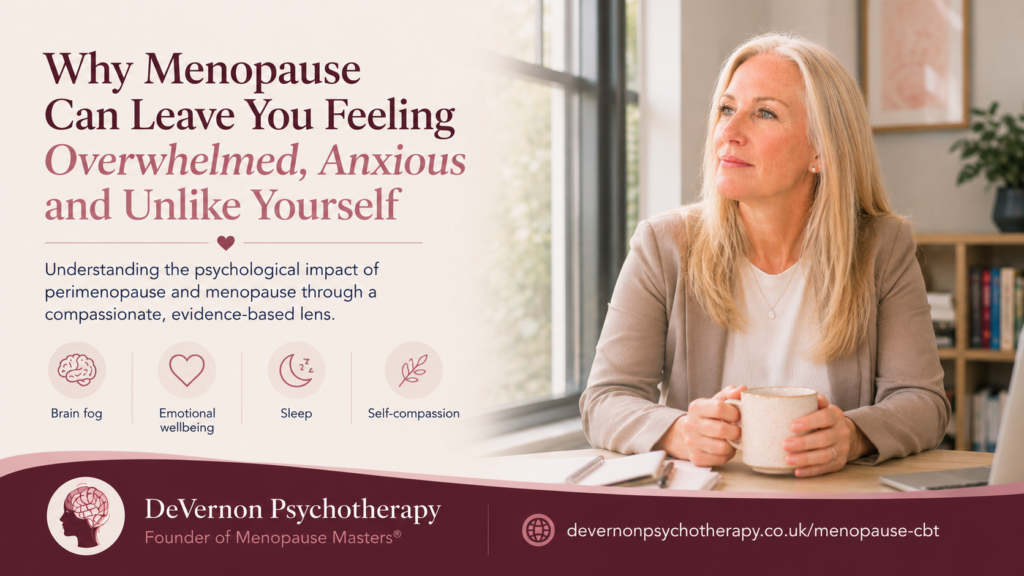
By Karen Vernon, BABCP Accredited CBT Therapist, RMN and Founder of Menopause Masters®
One of the most common things I hear from women during perimenopause and menopause isn’t about hot flushes or night sweats.
It’s this:
“I don’t feel like myself anymore.”
For many women, this can be one of the most distressing aspects of menopause. You may begin to question your confidence, your memory, your ability to cope or even your identity.
The good news is that these experiences are common, understandable and often linked to the psychological and physical changes that occur during this stage of life.
Why Does Everything Feel More Overwhelming?
Many women tell me they feel overwhelmed by everyday tasks that never used to bother them.
Work deadlines.
Family responsibilities.
Remembering appointments.
Making decisions.
When several demands occur at once, it can feel as though everything becomes “too much.”
This isn’t because you’ve suddenly become less resilient.
During perimenopause and menopause, fluctuating hormone levels can influence sleep, mood, concentration and emotional regulation. When you combine this with the pressures of work, caring responsibilities and daily life, your brain and body are already working much harder than they were before.
What once felt manageable may now require significantly more effort.
One of the most compassionate questions you can ask yourself is:
“What have I been carrying for too long?”
Often, recognising the load you’re carrying is the first step towards reducing it.
Why Has Anxiety Appeared Out of Nowhere?
Many women tell me:
“I’ve never been an anxious person before.”
This can be confusing and frightening.
Anxiety during menopause doesn’t always have an obvious trigger. Instead, hormonal fluctuations can influence the brain systems involved in emotional regulation and stress responses. When anxiety is combined with poor sleep, brain fog or physical symptoms such as palpitations, it can feel as though you’re constantly on edge.
You may notice yourself:
- Worrying more than usual
- Feeling irritable
- Overthinking conversations
- Struggling to switch off
- Losing confidence in situations that once felt easy
Understanding that anxiety can be associated with menopause often helps reduce the fear that something is seriously wrong.
Knowledge brings reassurance.
“I Don’t Feel Like Myself Anymore”
Perhaps the phrase I hear most often is:
“I don’t recognise myself.”
Brain fog, anxiety, disrupted sleep and reduced confidence can make women feel disconnected from the person they have always known themselves to be.
It’s understandable.
When everyday activities require more effort, it’s easy to begin questioning your abilities.
But it’s important to remember this:
Menopause may change how you feel. It does not change your intelligence, experience or value.
Your abilities have not disappeared.
Your brain and body are adapting to a significant hormonal transition.
A Psychotherapeutic Perspective
As a CBT therapist, I often help women explore not only the physical symptoms of menopause but also the beliefs they develop about themselves because of those symptoms.
Thoughts such as:
- “I’m not coping.”
- “I’m losing my mind.”
- “I’m becoming useless.”
can increase anxiety and reduce confidence further.
Learning to recognise these thoughts, respond with self-compassion and develop practical coping strategies can make a significant difference to emotional wellbeing.
Rather than asking:
“What’s wrong with me?”
Try asking:
“What does my mind and body need from me today?”
That small shift can reduce self-criticism and encourage a kinder, more realistic response.
Practical Ways to Support Yourself
While every woman’s experience is different, you may find it helpful to:
- Prioritise restorative sleep where possible.
- Stay hydrated and eat regularly.
- Break larger tasks into smaller, manageable steps.
- Reduce unnecessary commitments during difficult periods.
- Practise self-compassion rather than self-criticism.
- Talk openly with trusted family members, friends or colleagues.
- Seek evidence-based support if symptoms are affecting your quality of life.
You don’t have to simply “push through.”
Support is available.
Final Thoughts
Perimenopause and menopause are significant life transitions.
Feeling overwhelmed, anxious or unlike yourself doesn’t mean you’re weak, failing or losing who you are.
It often means your body and mind are working much harder than anyone else can see.
With understanding, evidence-based support and compassion, it is possible to regain confidence, improve wellbeing and feel more like yourself again.
If you’re experiencing brain fog, anxiety or confidence changes during menopause, you can download my FREE Menopause Brain Fog CBT Toolkit or learn more about menopause-focused CBT support at DeVernon Psychotherapy.
Karen Vernon
BABCP Accredited CBT Therapist
RMN
Founder of Menopause Masters®